
Why cladding doesn't have to be a dirty word
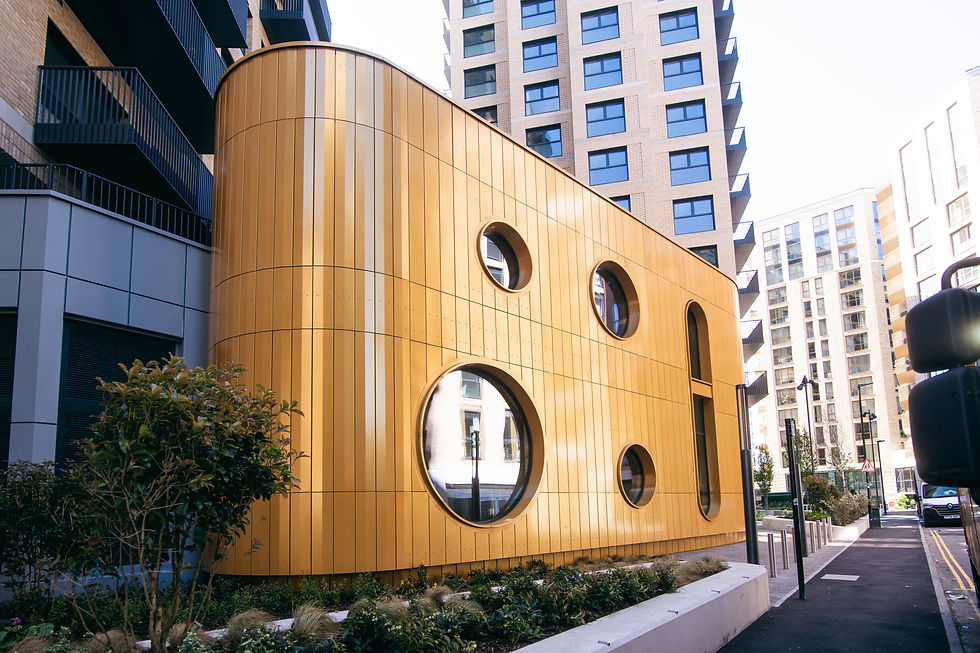
Few words in construction carry the same emotional weight as cladding. After Grenfell, the word stopped being seen as just another construction category. It became associated, understandably, with public distrust of the construction industry, failures in the regulatory system, product failures and, above all, real human tragedy.
We can't escape that. Nor should we. Innocent people lost their lives because of those failures. It's something the whole industry has to learn from and continue learning from.
But somewhere along the way, the conversation has become oversimplified. Cladding has almost become a byword for everything that went wrong in the construction industry. The reality is much more complex than that. The real issues were design quality, product suitability, detailing, interfaces, installation, and accountability.
If we're serious about rebuilding confidence, then we also need to move the conversation forward. We need to show a rightly sceptical public that the industry has changed – and steps are being taken so that it won't happen again.
Cladding isn't a product. It's a discipline.
Cladding is far too broad a term to be thought of as simply a product. It's what goes on the outside of a building. But after more than 30 years at LockMetal, our understanding of what that really means has continued to evolve.
And our sense of responsibility has grown alongside it. Today, it's about much more than installing a facade. It's about the built environment, human safety, environmental performance, the quality of our urban landscape, and creating buildings where people can live and work safely and comfortably.
Safety lives in the detail
One of the biggest misconceptions is generalisation. People talk about cladding as though it's one thing, when in reality it's a package made up of countless details, interfaces, and decisions.
Another misconception is that one compliant product somehow guarantees a safe building. It doesn't.
A facade package can contain compliant components and still perform badly if interfaces are poor, detailing is weak, or installation and records aren't properly controlled.
We're also never going to reach a point where everything is perfect. That's why our systems have to be robust enough to deal with human error and the consequences of human error, so buildings remain safe throughout their life. That's what good compliance really looks like.
Confidence comes from competence
Grenfell changed the conversation, and rightly so. The direction of travel is good. The industry is more evidence-led, more focused on accountability and much clearer about what has to be proven.
That's a positive change. But confidence isn't rebuilt by saying the right things. It's rebuilt by doing the hard yards.
That means challenging weak assumptions. Producing details that can actually be built. Managing installation quality properly. Collecting the evidence that's needed. Maintaining the Golden Thread. Understanding the human realities of construction, because the people installing these systems are working in difficult conditions, under pressure, with all the challenges that come with real projects.
Why this matters now
At LockMetal, we don't do defensive estimating. We don't throw money at a problem and hope to solve it later.
We ask difficult questions. We interrogate awkward junctions. We examine build sequences. We define scope properly. We coordinate with adjoining packages.
We front-load the design process and stay focused on safety, compliance, and evidence from design through installation.
We're not interested in paperwork for paperwork's sake or surface-level reassurance. We're interested in walking away from every project knowing we've done the right thing, and that our customer has benefited from it.
Because the conversation shouldn't be about whether cladding is good or bad. It should be about who designed it, who owns the interfaces, what evidence exists, and whether the package is genuinely buildable, safe and auditable.
When detail-heavy, interface-dense façade packages are delivered by people who care, who know what they're doing and who understand facades inside out, cladding doesn't have to be a dirty word.


